
The core performance of shapewear is largely determined by the percentage of spandex (elastane) blended into the fabric. Many brands fall into misconceptions during new product development: higher spandex means better elasticity, while lower spandex delivers greater durability. However, after sampling and mass production, common issues emerge: insufficient compression, fabric sagging after repeated washes, and rolling waistbands or leg openings that trigger high return rates.
一、Spandex Percentage vs. Shapewear Compression Level
1.Low spandex blend (2%–8%)
The fabric is firmer with limited elasticity and slow recovery after stretching.
- Application: Light compression shapewear, everyday subtle shaping, seamless base layers.
- Compression performance: Gentle containment only, not suitable for heavy abdominal shaping.
- Limitation: Limited stretch range; tight marks easily appear after long-time wear, especially for plus-size fits.
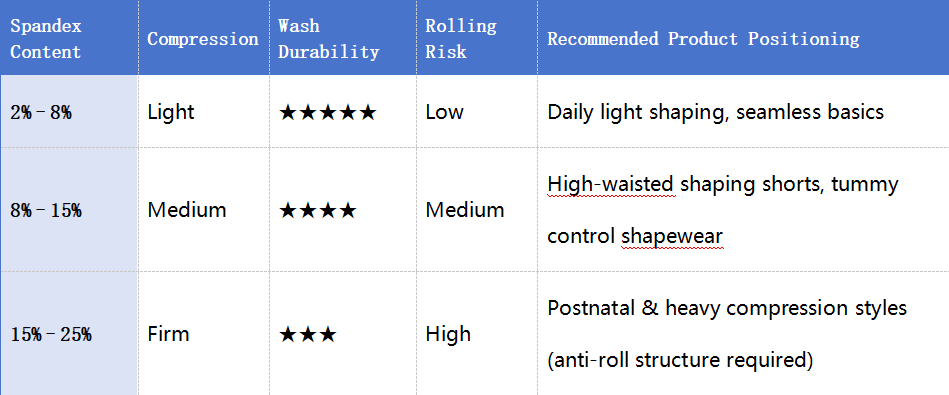
2.Medium spandex blend (8%–15%, mainstream range for shapewear)
Balanced elasticity and support. This is the preferred composition for most seamless shapewear and high-waisted shaping shorts.
- Application: Medium compression for tummy and hip shaping with acceptable comfort.
- Compression performance: Stable consistent containment. Fabric does not lose shaping power quickly during prolonged wear.
- Advantages: High pattern tolerance, easier sampling and stable mass production.
3.High spandex blend (15%–25%)
High stretch ratio and strong instant recovery.
- Application: Firm compression shapewear, postnatal recovery and heavy tummy control items.
- Compression performance: Strong instant wrapping force. Key caveat: Too much spandex reduces fabric rigidity. Soft fabric with high spandex creates "fake compression" — it stretches but fails to hold and support body tissue.
- Development reminder: Firm compression cannot rely solely on raising spandex proportion. Pair with high-count nylon/polyester plus structural design (double layers, ribbing, localized reinforcement) to achieve zone-specific compression.

二、Spandex Percentage vs. Wash Durability
1.Low spandex (2%–8%)
Fewer spandex filaments mean fewer failure points. Nylon/polyester base offers best wash resistance.
- Performance: Minimal dimensional change after washing; fabric resists slackening.
- Limitation: Limited shaping capability, narrow product positioning.
2.Medium spandex (8%–15%)
Industry sweet spot balancing shaping function and durability.
- Performance: Maintains elasticity after 50–80 gentle cold-water washes. Elasticity decays gradually, matching consumer expectations.
- Mass production fit: Balances shaping effect and service life, lowest customer complaints about sagging.
3.High spandex (15%–25%)
More spandex fibers raise the risk of degradation over washes.
- Pain points: Hot water washing, tumble drying and alkaline detergent accelerate spandex breakdown. Elasticity drops rapidly after repeated cycles.
- Product design solution: Add anti-aging finishing treatment to fabric. Care labels must clearly state cold hand wash and no tumble drying.
- B-side reminder: Firm compression styles with high spandex require strict care instructions, otherwise brands face high return rates.

三、How Spandex Percentage Impacts Edge Rolling
1.Low spandex blend
Higher fabric rigidity and lower stretch.
- Strength: Less edge rolling because fabric shrinkage force does not pull edges inward.
- Weakness: Limited stretch; edges may squeeze skin and leave indentations during body movement.
2.Medium spandex blend
Good elasticity while retaining moderate stiffness.
- Performance: Rolling risk is manageable with proper pattern design and seamless bonded edges.
- Risk note: Thin fabric with medium spandex may still slightly roll during vigorous movement.
3.High spandex blend
Soft fabric with powerful contraction force → highest rolling tendency.
Mechanism: When high-spandex fabric bends and rubs against skin, continuous internal shrinkage pulls waist/leg edges to curl inward without enough fabric stiffness to counteract tension.
- Mitigation solutions
- ✅ Zone-differentiated fabric: Reduce spandex percentage and increase fabric weight at waistband.
- ✅ Wider waistband / leg bands.
- ✅ Silicone anti-slip tape on edges or double-layer construction.
- B2B Pitfall Alert: Boosting spandex for heavy shaping without zone structural optimization almost guarantees rolling complaints.
四、Key Takeaways for Brands & ODM Partners
- Spandex percentage lays the foundation for shaping performance, but more spandex is not always better. Firm compression is achieved by combining spandex elasticity, fabric rigidity, knitting structure and zone design. Simply increasing spandex leads to poor wash resistance and higher rolling risk.
- At project kick-off, define compression requirements based on target market first, then confirm fabric composition, weight and knitting method, instead of locking in fabric formula before product specification.
- Sampling validation should include compression testing, cyclic wash testing and dynamic wear rolling test to predict after-sales issues before mass production.
- Market differentiation: European & American buyers prioritize wash performance and all-day comfort; Latin American markets prefer firm compression, requiring optimized anti-roll construction.