
In traditional perception, intimate apparel factories are often labeled as "make-to-sample" workshops or low-cost manufacturers. However, in today's global supply chain landscape, truly competitive intimate apparel factories are no longer just sewing workshops. They have evolved into comprehensive partners integrating fabric R&D, pattern design, process innovation, and ODM (Original Design Manufacturer) solutions.
For brands, e-commerce sellers, and even brick-and-mortar retailers, understanding an intimate apparel factory's product development and ODM capabilities directly determines whether you find a factory that "manufactures for others" or a factory that "helps you build your own brand."
1. What is Intimate Apparel ODM? How is it different from OEM?
- OEM (Original Equipment Manufacturer): "White-label manufacturing." The brand provides complete designs, specifications, and fabric requirements; the factory is responsible only for production according to specifications. The typical characteristic: "brand contributes the brain, factory contributes the hands."
- ODM (Original Design Manufacturer): "Original design manufacturing." The factory is responsible not only for production but also for upstream activities such as design, pattern development, fabric selection, and process optimization. Brands can choose styles from the factory's existing design library or provide requirements for the factory to develop and execute. The typical characteristic: "factory contributes both brains and hands."
To put it simply: OEM means "you call the shots, I just execute"; ODM means "you share your ideas, I help you realize them."
In the intimate apparel industry, due to characteristics such as complex patterns, diverse sizing systems, high fabric elasticity, and demanding functional requirements, the value of ODM far exceeds that in ordinary apparel categories.
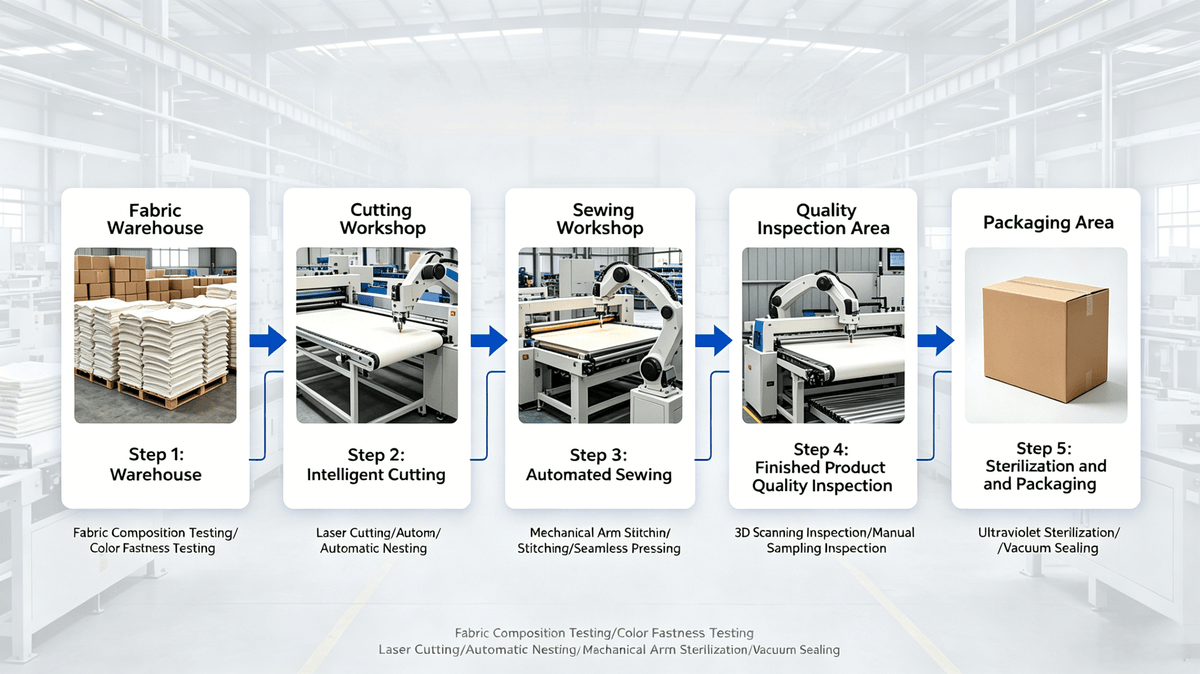
2. What are the Core Product Development Capabilities of an Intimate Apparel Factory?
According to five dimensions:
2.1 Pattern Database: The Most Core Intangible Asset
Intimate apparel is the apparel category most dependent on patterns. Parameters such as underwire curvature, center gore height, side wing width, strap angle, and cup volume
directly determine wearing comfort.
A mature ODM factory typically has a pattern database accumulated over many years, covering:
- Different cup styles: 1/2 cup, 3/4 cup, full cup, triangle cup
- Different breast shapes: round, hemispherical, conical, pendulous
- Different sizes: from A cup to G cup, from S to XXXL
The value of this database is that when a brand presents requirements, the factory does not start pattern-making from scratch but makes fine adjustments based on existing proven patterns, shortening the development cycle from the typical 45–60 days to 15–30 days.
2.2 Fabric R&D and Selection Capability
The complexity of intimate apparel fabrics far exceeds that of outerwear. A single piece of intimate apparel may involve:
- Lace outer layer (elasticity, pattern, skin-friendliness)
- Molded cup foam (density, resilience, breathability)
- Inner lining (moisture-wicking, antibacterial)
- Strap/fastener accessories (durability, slip resistance)
ODM factories typically have deep partnerships with fabric suppliers or even develop their own exclusive fabrics. Common intimate apparel ODM fabric capabilities include:
- Proprietary developed jacquard lace (avoiding stock patterns to create brand identity)
- Functional fabrics: antibacterial, quick-dry, cooling sensation, far-infrared, graphene
- Eco-friendly materials: recycled nylon, biodegradable foam, plant-based dyes
2.3 Process Engineering Capability
The production process of intimate apparel involves multiple steps including cutting, sewing, bonding, molding, and inspection, many of which rely on specialized equipment (such as ultrasonic bonding machines, heat press molding machines, and cup forming machines).
An ODM factory's process engineering capability is reflected in:
- Ability to achieve seamless bonding (e.g., one-piece seamless intimate apparel)
- Ability to handle multi-layer fabric lamination (lace + foam + lining – three layers bonded without edge curling)
- Ability to consistently control molded cup compression curves (avoiding foam blistering or deformation)
2.4 Design and Planning Support
For small and medium-sized brands, the biggest gap is often not production channels but
what to sell next season. Leading ODM factories typically have their own design teams capable of providing:
- Trend analysis (colors, patterns, silhouettes)
- Pre-season planning proposals (themes, product mix, development schedule)
- Color card and fabric recommendations
This means brands can select and order directly from the factory's seasonal development samples, significantly lowering their own design investment threshold.
2.5 Quality Control and Certification System
An ODM factory's product development capability ultimately must be reflected in scalable, reproducible quality. Common industry certifications include:
- ISO 9001 (Quality management system)
- OEKO-TEX Standard 100 (Harmful substance testing – a basic requirement in the intimate apparel industry)
- BSCI (Social responsibility audit – common for exports to Europe)
- GRS (Global Recycled Standard – applicable for eco-friendly material products)
Factories with these certifications typically have standardized development and production processes capable of consistently delivering ODM orders.
3. What are the Intimate Apparel ODM Collaboration Models?
Depending on the brand's different needs, intimate apparel ODM typically offers the following collaboration models:

Among these, semi-custom development is currently the most mainstream model for small and medium-sized brands: the brand provides a requirement description (target audience, style preferences, price range, functional requirements), the factory develops and produces samples based on its own pattern and fabric libraries, and both parties jointly adjust and confirm before mass production.
4. How to Evaluate an Intimate Apparel Factory's ODM Capability?
If you are a brand looking for an ODM partner, here are several dimensions to assess through on-site evaluation:
a.Look at the pattern room: Does the factory have an independent pattern-making team? How many years of experience do the pattern makers have? Is 3D pattern-making software used?
b.Look at the sample library: Can the factory display over 50 self-developed sample styles at once? This is a direct way to distinguish a "genuine ODM" factory from a "fake ODM" one.
c.Look at past brand clients: What types of clients has the factory served in the past? Pure export OEM, or has it helped domestic new brands grow?
d.Look at minimum order quantities (MOQ): Factories genuinely willing to support small and medium-sized brands typically have MOQs of 300–1,000 pieces per style, not 5,000 pieces as a starting point.
e.Look at the service chain: Does the factory offer extended services such as photoshoots, packaging design, and drop-shipping? This determines whether the factory is a "product supplier" or a "brand partner."
5. Industry Trends in Intimate Apparel ODM
Between 2024 and 2026, several significant changes are occurring in the Chinese intimate apparel ODM industry:
- Plus-size intimate apparel becomes a major growth driver: Demand for D–G cups and XL–XXXL sizes is growing much faster than for A–C cups. Factories with plus-size pattern expertise continue to see increasing bargaining power.
- The "one-size-fits-all" trend fades: Pure "one-size" products have persistently high return rates. The industry is returning to a more scientific approach of "fine-tuned fit + multiple sizes," placing higher demands on factory pattern precision.
- Eco-friendly materials shift from "nice-to-have" to "must-have": The EU market continues to raise requirements for recycled material content. Certifications like OEKO-TEX and GRS have become nearly standard for export-oriented ODM factories.
- Small-batch, quick-response becomes the norm: Brands no longer want to place large orders at once, preferring models like "first order 300 pieces for testing → reorder only on bestsellers," challenging factories' supply chain flexibility.
All in all,finding the right ODM factory is far more important than finding a good design outsourcing partner or operations agency. Because in the intimate apparel category,
the product itself is the most core expression of the brand — whether the fit is comfortable, whether the shape holds up after multiple washes, whether the lace irritates the skin — consumers will know the answer within 30 seconds of putting it on.